SUMMARY
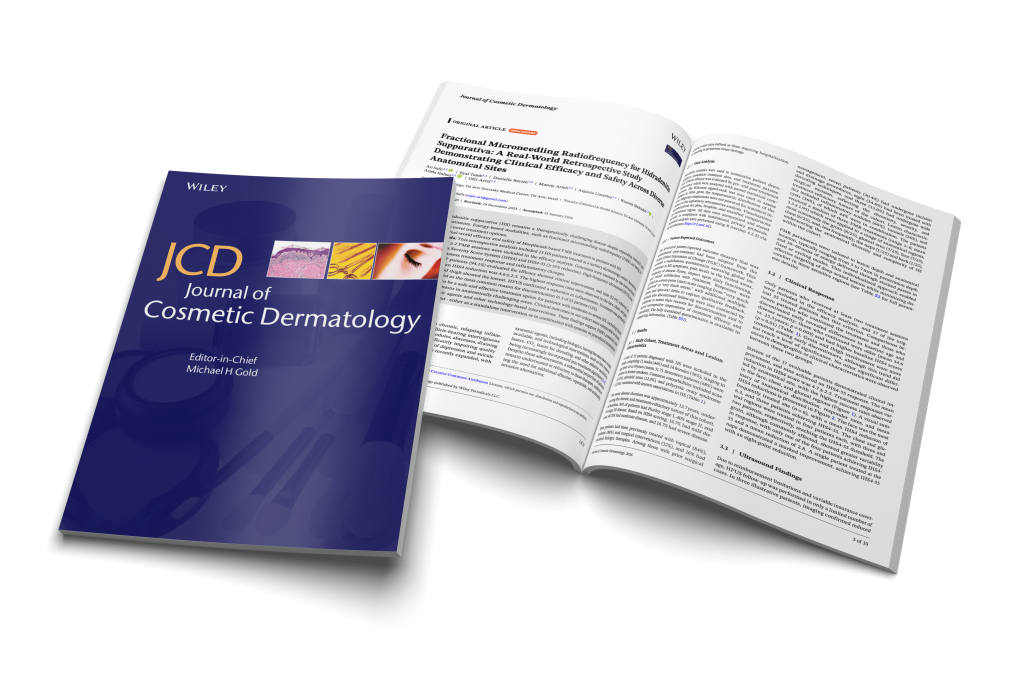
Summary: Hidradenitis suppurativa (HS) is a chronic inflammatory condition with limited durable treatment options, particularly in moderate-to-severe and refractory cases. This retrospective real-world study evaluated the safety and efficacy of fractional microneedling radiofrequency (FMR) using Morpheus8 in 25 HS patients at a tertiary dermatology center. Seventeen patients who completed at least two sessions were included in the efficacy analysis. Outcomes were measured using IHS4 and IHS4-55 (≥55% reduction), with high-frequency ultrasound used in select cases.
Among evaluable patients, 94.1% showed clinical improvement and 52.9% achieved IHS4-55 response, with a mean IHS4 reduction of 4.6 ± 2.5. The highest response rates were observed in the face, chest, and gluteal regions. Treatment was generally well tolerated, with pain cited as the most common reason for discontinuation (12%). Results were comparable to advanced systemic therapies and other technology-based interventions.
Conclusion: Fractional RF microneedling with Morpheus8 appears to be a safe and effective option for moderate-to-severe HS, including refractory disease and anatomically challenging areas. Significant reductions in disease severity and ultrasound-confirmed decreases in inflammation support its role in personalized HS management, either alone or in combination with other treatments.
TOPICS COVERED
- Study Objective: To evaluate the real-world safety and efficacy of Morpheus8 bipolar radiofrequency microneedling (RF) in patients with moderate-to-severe hidradenitis suppurativa, including refractory cases.
- Treatment Protocol: Patients were treated with Morpheus8 Body 3D or 40-pin microneedle tips delivering bipolar RF at variable depths (typically 4–7 mm) and medium-to-high energy (20–60), spaced every 6–8 weeks, with session number and interval adjusted based on clinical response and disease control.
- Clinical Outcomes: Among patients completing ≥2 sessions, 94.1% showed clinical improvement, 52.9% achieved IHS4-55 response, and mean IHS4 scores decreased by 4.6 points, with ultrasound confirming reduced inflammation.
- Patient Satisfaction: Most patients reported moderate-to-marked improvement in symptoms, reduced flare frequency, improved daily functioning, and high overall satisfaction, with meaningful clinical benefits typically noted after the third session.
- Conclusion: Morpheus8 appears to be a safe, well-tolerated, and effective option for moderate-to-severe HS, supporting its role as a personalized standalone or adjunctive treatment strategy.