SUMMARY
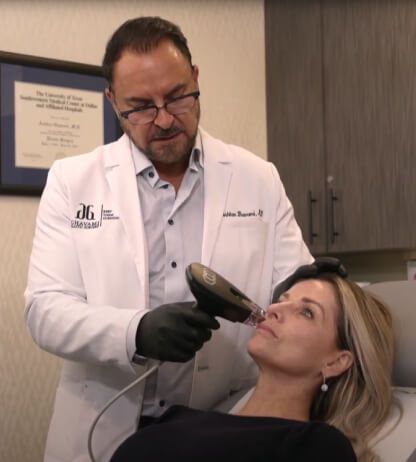
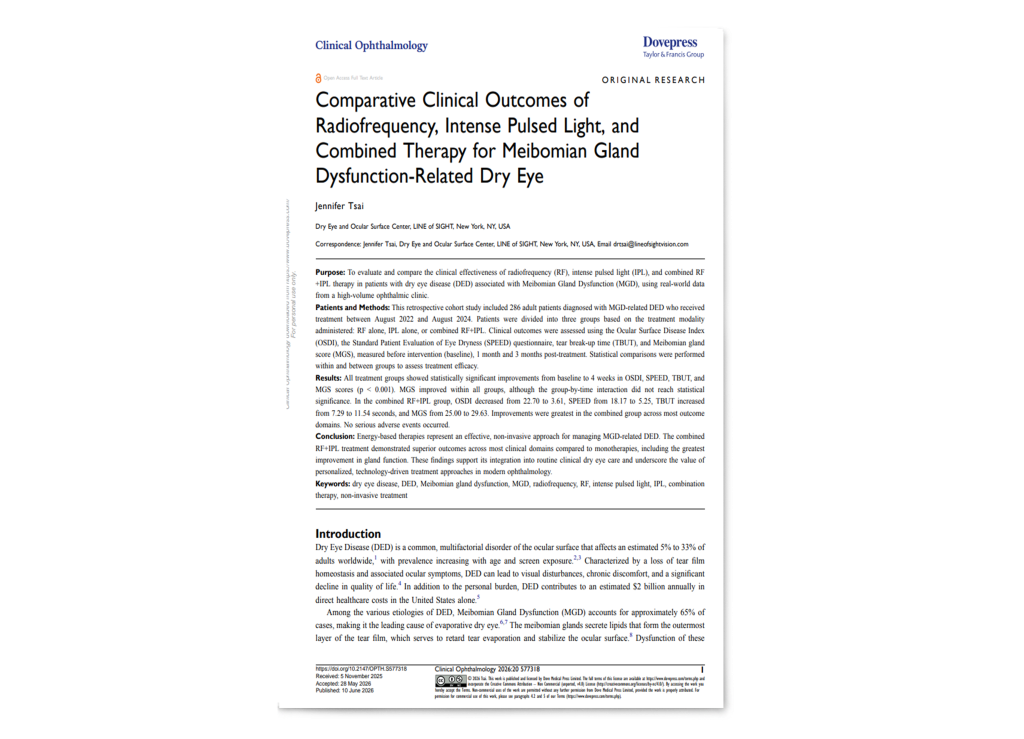
Summary: This retrospective real-world cohort study evaluated the safety and effectiveness of radiofrequency (Forma-I), intense pulsed light (Lumecca with the Lumecca-I adaptor), and combined RF+IPL (Forma-I + Lumecca with the Lumecca-I adaptor) therapy for the treatment of Meibomian Gland Dysfunction (MGD) related Dry Eye Disease (DED). A total of 286 patients received either RF alone, IPL alone, or combined RF+IPL therapy. Clinical outcomes were assessed using the Ocular Surface Disease Index (OSDI), Standard Patient Evaluation of Eye Dryness (SPEED), tear break-up time (TBUT), Meibomian Gland Score (MGS), corneal staining, and meibography at baseline and follow up visits.
All treatment groups demonstrated statistically significant improvements in both subjective symptoms and objective clinical measures. The combined RF+IPL group demonstrated the most consistent and significant improvements across multiple domains, including a reduction in OSDI scores from 22.70 to 3.61, SPEED scores from 11.74 to 6.82, TBUT improvement from 7.29 to 11.54 seconds, and MGS improvement from 25.00 to 29.63. Combination therapy produced the greatest improvements in corneal staining and meibography, indicating enhanced ocular surface health and improved meibomian gland structure.
Conclusion: Radiofrequency, IPL, and combined RF+IPL therapy provide safe, controlled, consistent, and reproducible thermal treatments for MGD related DED. Combination therapy demonstrated superior outcomes and supports the use of multimodal, energy-based treatments, such as those delivered by the InMode Forma-I and Lumecca with the Lumecca-I adaptor technologies, as valuable tools in the comprehensive, therapeutic management of evaporative DED.
TOPICS COVERED
- Comparison of Treatment Modalities: Evaluates Forma-I radiofrequency (RF), Lumecca intense pulsed light (IPL), and combined RF+IPL therapy for managing meibomian gland dysfunction (MGD)-related dry eye disease.
- Clinical Outcomes: Assesses improvements in dry eye symptoms, tear film stability (TBUT), meibomian gland function, corneal staining, and gland structure using validated clinical measures.
- Combination Therapy Benefits: Demonstrates that combined RF+IPL produced the greatest improvements across most subjective and objective outcomes compared with either treatment alone.
- Safety & Tolerability: Reviews the safety profile of energy-based dry eye treatments, with no serious adverse events reported and only one minor, self-resolving skin burn.
- Clinical Implications: Highlights the role of multimodal, non-pharmacologic therapies as an effective approach for personalized management of evaporative dry eye.